
WELCOME PACK BONUS
OF 400% UP TO €3200
+ 200 FREE SPINS
OF 400% UP TO €3200
+ 200 FREE SPINS
Home → Games
Casino games at Ltc Casino
RNG Roulette vs. Live Table: Four Clear Differences
French Roulette with La Partage offers an RTP of 98.65% on even-money bets, significantly outperforming standard European variants that hold a 2.70% house edge. This rule refunds half the stake on zero, reducing the casino's advantage to just 1.35% for Red/Black wagers. Consequently, players preserve their bankroll longer compared to games without this specific protection mechanism.
European Roulette operates with 37 sectors and maintains a constant 2.70% house edge across all bet types, from Straight to Column bets. Unlike the French variant, it lacks the La Partage rule, meaning inner bets like Splits pay 17:1 but carry no partial refund on zero. Players must accept the higher statistical cost when wagering on these inner combinations without special protections.
Live dealer tables often utilize different rulesets or lack specific side bets found in RNG versions, altering the theoretical return rates. For instance, while RNG Baccarat Player pays 1:1 with a 1.24% house edge, live variations might impose different commission structures or table limits. These structural differences directly impact the expected value and volatility of every single hand played at the virtual or physical table.
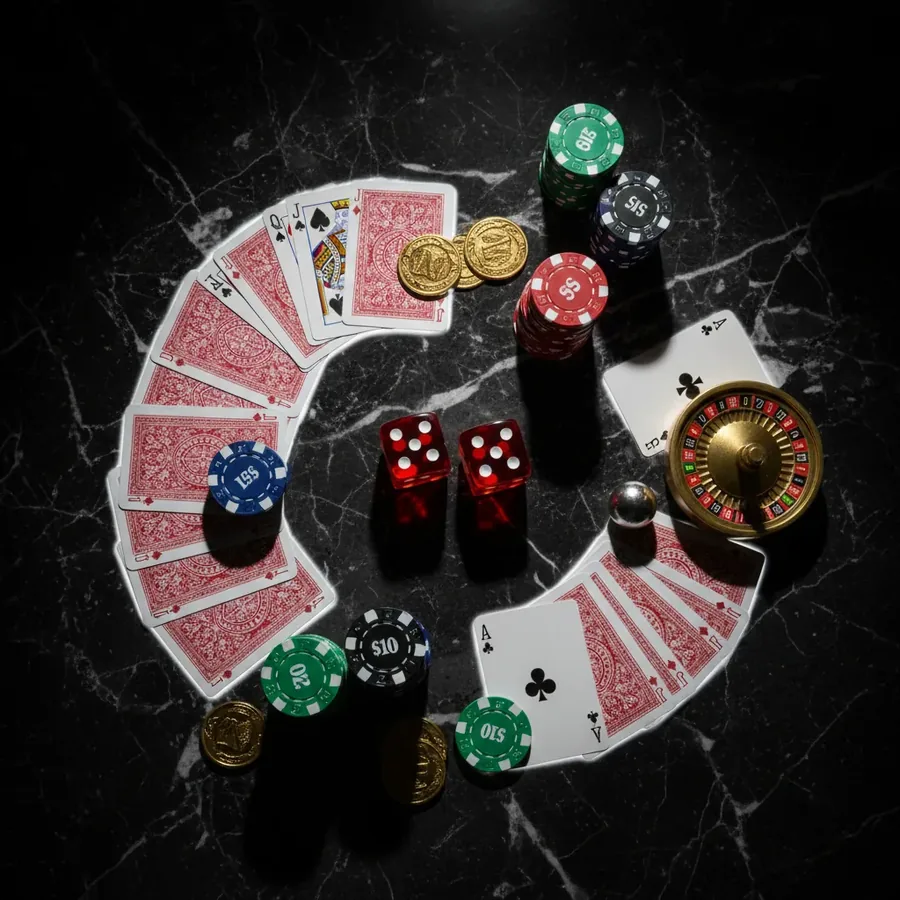
Straight, Split, and Corner in direct comparison
The Straight bet in European Roulette targets a single number with a payout of 35:1, reflecting the highest risk among common chip placements. This high reward corresponds to a low probability of winning, contributing to the game's overall 2.70% house edge for all wagers. Players seeking frequent small wins should avoid this volatile option in favor of lower-paying alternatives.
A Split wager covers two adjacent numbers by placing chips on the dividing line, offering a payout of 17:1 if one hits. This option halves the risk compared to a Straight bet while still maintaining the standard 2.70% house edge inherent to European Roulette. It provides a balanced approach for players who want better odds than single-number bets without sacrificing significant returns.
Corner bets cover four numbers arranged in a square, paying 8:1 when any of the selected spots wins on the roulette wheel. Like other inner bets, this placement carries the same 2.70% house edge as the Straight and Split options in European Roulette. The increased coverage reduces variance slightly, making it a popular choice for strategic chip distribution during gameplay sessions.
Roulette Wheel with 37 vs 38 Pockets
European Roulette features a wheel with 37 pockets, including numbers 1 through 36 and a single zero sector. This configuration establishes a fixed 2.70% house edge across all betting options, from simple chances to complex inner combinations. The absence of a double zero keeps the odds more favorable for players compared to American variants with additional losing pockets.
American Roulette typically includes 38 pockets by adding a double zero, which increases the house edge to approximately 5.26% on most bets. This extra pocket reduces the player's probability of winning on even-money wagues like Red or Black from 48.6% to 47.4%. The mathematical disadvantage is nearly double that of the European version, impacting long-term bankroll sustainability significantly.
The difference between 37 and 38 pockets translates to a substantial variation in expected loss per spin for identical wager amounts. A player betting 1€ per spin on Red loses an average of 0.027€ in European Roulette versus 0.0526€ in American versions. This statistical gap accumulates rapidly over hundreds of spins, making the 37-pocket wheel the superior choice for value-conscious gamblers.
Double Down: Doubling Your Bet After Two Cards
Blackjack allows players to double their initial wager after receiving two cards, provided they commit to hitting exactly once more. In optimal rule sets featuring Double After Split, this strategy can reduce the house edge by approximately 0.14 percentage points. Utilizing this option correctly against dealer upcards strengthens the player's position in specific mathematical scenarios.
Doubling down requires placing an additional bet equal to the original stake, effectively doubling the risk on that specific hand. If the next card improves the total to 21 or beats the dealer, the payout remains at standard 1:1 odds on the doubled amount. This mechanic amplifies both potential profits and losses, demanding precise adherence to basic strategy charts for maximum efficiency.
The availability of Double After Split varies by game variant, with some tables restricting doubling to only the first two cards dealt. When permitted after splitting pairs, this rule improves the overall RTP by roughly 0.14% compared to restrictions limiting doubles to initial hands. Players should verify these specific table rules before seating, as they significantly influence the long-term expected value of their blackjack sessions.
How many sectors does the Game Show wheel have?
Standard European Roulette wheels contain exactly 37 numbered sectors, ranging from 0 to 36, arranged in a specific alternating color pattern. This configuration ensures a uniform probability distribution for each individual number hit, forming the basis for the game's 2.70% house edge. The physical layout dictates the payout ratios for all associated inside and outside betting options available to participants.
Sic Bo utilizes three dice rather than a wheel, generating outcomes based on sums ranging from 3 to 18 across various betting categories. While not a traditional wheel game, its Small and Big bets cover sums 4-10 and 11-17 respectively, offering a 2.78% house edge under Atlantic City rules. These flat bets provide predictable returns similar to roulette even-money wagers despite the different mechanical origin.
Game show style roulette variants may introduce bonus sectors or multipliers that alter the standard 37-pocket structure found in classic tables. These additions often come with modified payout tables or special conditions that affect the overall RTP and volatility of the game. Players must carefully review the specific rules of each variant to understand how additional sectors impact their potential winnings and the casino's statistical advantage.
Game categories at a glance
| Category | Examples | Stakes From | Highlight |
|---|---|---|---|
| Slots | Esqueleto Explosivo 2, Money Train 2, Mega Moolah | 0,10 EUR | thousands of titles |
| Table games | Roulette, Blackjack, Baccarat | 0,50 EUR | classic rules |
| Live casino | Lightning Blackjack, XXXtreme Lightning Roulette | 0,20 EUR | real dealers |
| Jackpot games | Mega Moolah, Divine Fortune, Age of the Gods | 0,20 EUR | progressive pools |
| Instant games | Aviator, Plinko, Mines | 0,10 EUR | fast rounds |
| Video poker | Jacks or Better, Deuces Wild | 0,25 EUR | strategy based |
Martingale Fails After 8 Rounds at Table Limit
Roulette French with La Partage offers a house edge of 1.35% on even-money bets, which theoretically supports recovery strategies like the Martingale system over short sessions. However, table limits and finite bankrolls inevitably truncate this progression, as each doubling step exponentially increases the required stake to cover previous losses. Consequently, a standard eight-round failure occurs when the cumulative bet exceeds the casino's maximum allowed wager for that specific table game.
The mathematical expectation remains negative regardless of the betting pattern, with the house edge of 1.35% applying strictly to the total amount wagered rather than just the final outcome. A player attempting to recover losses through doubling must account for the fact that the probability of hitting a losing streak does not decrease as the session lengthens. This structural reality ensures that the expected value stays aligned with the initial theoretical return rate defined by the game rules.
Therefore, the strategy fails in practice because the financial risk grows much faster than the potential profit from a single winning round. Players should recognize that no betting system can overcome the inherent mathematical disadvantage built into the wheel layout and payout structure. The inevitable table limit acts as a hard cap that prevents the recovery mechanism from functioning indefinitely.
100 EUR bet, 50 rounds: the expected value
Baccarat Player with eight decks yields an RTP of 98.76%, corresponding to a house edge of 1.24% per hand played. When a player wagers exactly 100 EUR across fifty independent rounds, the total volume of action amounts to 5,000 EUR in turnover. This baseline figure serves as the foundation for calculating the statistical loss predicted by the game's long-term mathematics.
Multiplying the total turnover of 5,000 EUR by the house edge of 1.24% results in an expected loss of 62.00 EUR over the specified period. This calculation assumes that every round is settled independently and that the player maintains a consistent bet size throughout the session without deviation. The result represents the average outcome if this specific scenario were repeated an infinite number of times under identical conditions.
The actual financial outcome will fluctuate around this mean due to variance, but the mathematical expectation provides a reliable benchmark for managing bankroll expectations. Players should anticipate that their balance will likely decrease by approximately this amount after completing the fifty rounds. This predictable erosion of funds highlights the importance of viewing table games as entertainment costs rather than investment vehicles.
Why the Double Zero Almost Doubles the House Edge
European Roulette features a single zero pocket, resulting in a house edge of 2.70% for all standard bets on the wheel. In contrast, American Roulette introduces a double zero pocket, which increases the total number of slots from thirty-seven to thirty-eight. This additional slot alters the probability distribution for every wager placed on the table, directly impacting the player's return rate.
The presence of the double zero reduces the probability of winning any given even-money bet from 18/37 to 18/38, effectively nearly doubling the advantage held by the casino. While the payouts remain fixed at 1:1, the increased frequency of losing outcomes shifts the expected value significantly against the player. This structural difference makes the American variant statistically less favorable compared to its European counterpart.
Consequently, players facing a double-zero wheel should expect a higher rate of bankroll depletion over time compared to playing at a single-zero table. The house edge of approximately 5.26% on American wheels means that twice as much money is retained by the casino relative to the turnover. Choosing the single-zero variant is a critical decision for minimizing long-term losses.
Four Blackjack Hand Decisions at a Glance
Blackjack rules regarding Soft 17 (S17) versus Hard 17 significantly impact the overall return to player percentage. When the dealer hits on soft 17, the house edge increases by 0.22 percentage points compared to standing on all 17s. This rule variation requires players to adjust their basic strategy charts to maintain optimal play against the dealer's upcard.
Resplitting Aces (RSA) improves the player's position by allowing additional hands to be created from a split pair of aces, reducing the house edge by 0.08 percentage points. Similarly, allowing doubling after splitting (DAS) further decreases the edge by approximately 0.14 percentage points by providing more opportunities to capitalize on strong starting cards. These combined rule modifications create a more favorable environment for skilled players.
A six-deck shoe containing S17, DAS, and RSA rules typically offers an RTP of 99.54%, resulting in a minimal house edge of 0.46%. Players must adhere strictly to basic strategy to achieve this theoretical return, as deviations immediately increase the casino's advantage. Understanding these specific rule interactions is essential for maximizing profitability in blackjack variants.
Table Games Often Count Only 10 Percent
The welcome bonus terms specify that table games contribute only 10 percent towards the wagering requirement for the promotional offer. This restriction means that every 100 EUR wagered on eligible table games counts as merely 10 EUR towards fulfilling the bonus conditions. Slots, conversely, contribute 100 percent, making them the most efficient vehicle for clearing the required turnover.
For a 2,000 EUR bonus with a 40x wagering requirement, the total turnover needed is 80,000 EUR. If a player relies exclusively on table games with a 10% contribution rate, they must place 800,000 EUR in bets to satisfy the condition. This massive disparity in contribution rates dramatically increases the difficulty and cost of unlocking the bonus funds.
Players seeking to utilize the bonus on table games must therefore either accept a significantly higher volume of play or combine it with high-contributing slots. The low contribution percentage reflects the lower house edge associated with strategic table play, aligning the casino's risk with the promotional mechanics. Ignoring this term often leads to incomplete wagering requirements upon withdrawal requests.
Multihand Blackjack with Up to 5 Hands
The multihand variant allows players to manage up to five simultaneous deals, which significantly increases the average hourly bet volume compared to single-hand play. This higher action level accelerates the application of the house edge, meaning that while the base RTP remains at 99.54%, the total monetary loss per hour rises proportionally with the number of active hands. Players must strictly adhere to basic strategy to maintain this theoretical return, as any deviation reduces the expected value regardless of the hand count.
Standard rules for this table include six decks, soft 17 standing, double after split, and double on any two cards, all contributing to the favorable 0.46% house edge. The absence of a surrender option slightly increases the cost of play, yet the ability to double down on any pair still offers strong strategic flexibility for experienced gamblers. Consequently, the game structure rewards disciplined decision-making over luck, making it one of the most mathematically sound table games available on the platform.
Video Poker: check payout table before betting
Deuces Wild Not So Ugly Ducks offers an exceptional 99.73% return to player, resulting in a minimal house edge of just 0.27% when played with optimal strategy. This high efficiency stems from the specific payout structure, where Five of a Kind pays 16 coins and Straight Flushes award 10, unlike standard versions that may offer lower returns. Gamblers must verify these exact coefficients before playing, as even minor reductions in the full pay table can drastically increase the casino's advantage and decrease long-term profitability.
Contrast this with Jacks or Better 8/5, which provides a much lower RTP of 97.29% and a house edge of 2.71% due to reduced Full House and Flush payouts. The difference between the 9/6 and 8/5 variants costs approximately 2.25 percentage points in return, illustrating how sensitive video poker earnings are to table configurations. Therefore, selecting the correct machine is critical for minimizing losses, as the mathematical variance between different pay tables directly impacts the sustainability of a bankroll over thousands of hands.
Side bets like Player Pair in Baccarat present a starkly different risk profile, carrying a massive house edge of 10.36% against an RTP of only 89.64%. While main Baccarat bets offer edges around 1.24%, these auxiliary wagers are designed to generate significantly higher revenue for the operator through unfavorable odds. Understanding this disparity helps players avoid traps that erode their funds quickly, ensuring they focus on games with transparent and manageable statistical disadvantages rather than chasing high-payout side propositions.
Soft 17: the Ace counts 11 or 1
When the dealer stands on Soft 17, the game maintains its baseline 0.46% house edge, providing a more favorable environment for the player compared to dealers who hit soft totals. This rule prevents the dealer from improving weak hands like Ace-6 into stronger positions, thereby reducing the frequency of dealer busts and stabilizing the win rate for strategic players. Consequently, identifying tables with S17 rules is essential for maximizing the 99.54% RTP, as hitting soft 17 would increase the house advantage by 0.22 percentage points.
The definition of a Soft 17 involves an Ace counting as either 11 or 1, allowing flexibility that distinguishes it from Hard 17 totals consisting solely of numbered cards. This dual-value mechanic influences doubling opportunities and splitting strategies, requiring precise adherence to basic strategy charts to avoid costly errors during gameplay. By respecting these card values, players can optimize their decisions, such as doubling on hard 11 against a dealer's weak upcard, to exploit the mathematical advantages inherent in the game structure.
Comparing Soft 17 rules to other variations reveals that resplitting Aces improves the RTP by 0.08 percentage points, while doubling after split adds another 0.14 percentage points of value. These incremental benefits accumulate to create a superior playing condition, emphasizing the importance of checking multiple rule sets before sitting down at a virtual table. Each adjustment to the standard rules directly translates to a measurable change in the house edge, affecting the long-term viability of any betting strategy employed by the gambler.
Craps: Pass Line plus Odds lowers the average
The Pass Line bet in Craps carries a robust RTP of 98.64%, corresponding to a low house edge of 1.36% on the initial wager alone. This statistic makes it one of the most efficient bets on the floor, especially when combined with free odds bets that carry zero house advantage and thus dilute the overall average cost. By laying additional odds behind the line bet, players effectively reduce the weighted house edge per decision, turning a standard 1.36% disadvantage into a significantly smaller percentage over time.
A pass line win occurs if the come-out roll is 7 or 11, while a loss happens on 2, 3, or 12, with other numbers establishing a point for subsequent rolls. This four-step process defines the core mechanics of the game, requiring patience as the shooter attempts to repeat the point number before rolling a seven. The standard deviation of 0.99 indicates moderate volatility, allowing for steady progression through sessions without the extreme swings seen in high-variance slot machines or roulette variants.
Unlike Don't Pass bets which push on 12, the Pass Line wins immediately on 7, creating a slight asymmetry that favors the shooter's success rate in early rounds. This structural detail contributes to the 1.36% edge, distinguishing it from other craps wagers that may have higher costs or different payout structures. Players seeking to minimize the house cut should prioritize Pass Line combinations with maximum odds, as this strategy leverages the zero-edge nature of odds bets to protect their bankroll against the inevitable variance of the dice.
Pass Line in Craps: Process in Four Steps
The first step involves placing a Pass Line chip on the designated area of the layout before the shooter initiates the come-out roll, signaling intent to support the shooter. This initial action commits the player to the outcome of the next throw, whether it results in an immediate win, loss, or the establishment of a new point. The clarity of this opening move ensures that the bet is active and recognized by the table logic, setting the stage for the subsequent phases of the round.
In the second phase, the dice are rolled, and the result determines whether the round concludes instantly or progresses to the point-setting stage. A 7 or 11 awards an immediate win at 1:1 odds, while 2, 3, or 12 results in an immediate loss, except for the specific push conditions found in Don't Pass markets. This rapid resolution mechanism keeps the pace of the game brisk, allowing players to experience frequent outcomes and adjust their strategies based on the immediate feedback from the dice.
If a point number such as 4, 5, 6, 8, 9, or 10 is established, the third step requires the shooter to continue rolling until that specific number appears again. The fourth and final step occurs when either the point is repeated for a win or a 7 is rolled, causing a loss known as 'sevening out.' This cyclical process repeats indefinitely, maintaining the 1.36% house edge on the original wager throughout the duration of the shooter's turn, regardless of the intermediate outcomes or fluctuations in the dice results.
Contact
Live - online chat
Banking









Providers












ltc casino 2025